Convoy
Redesigned last-mile package delivery after research proved users wouldn't pay to protect packages they barely think about.
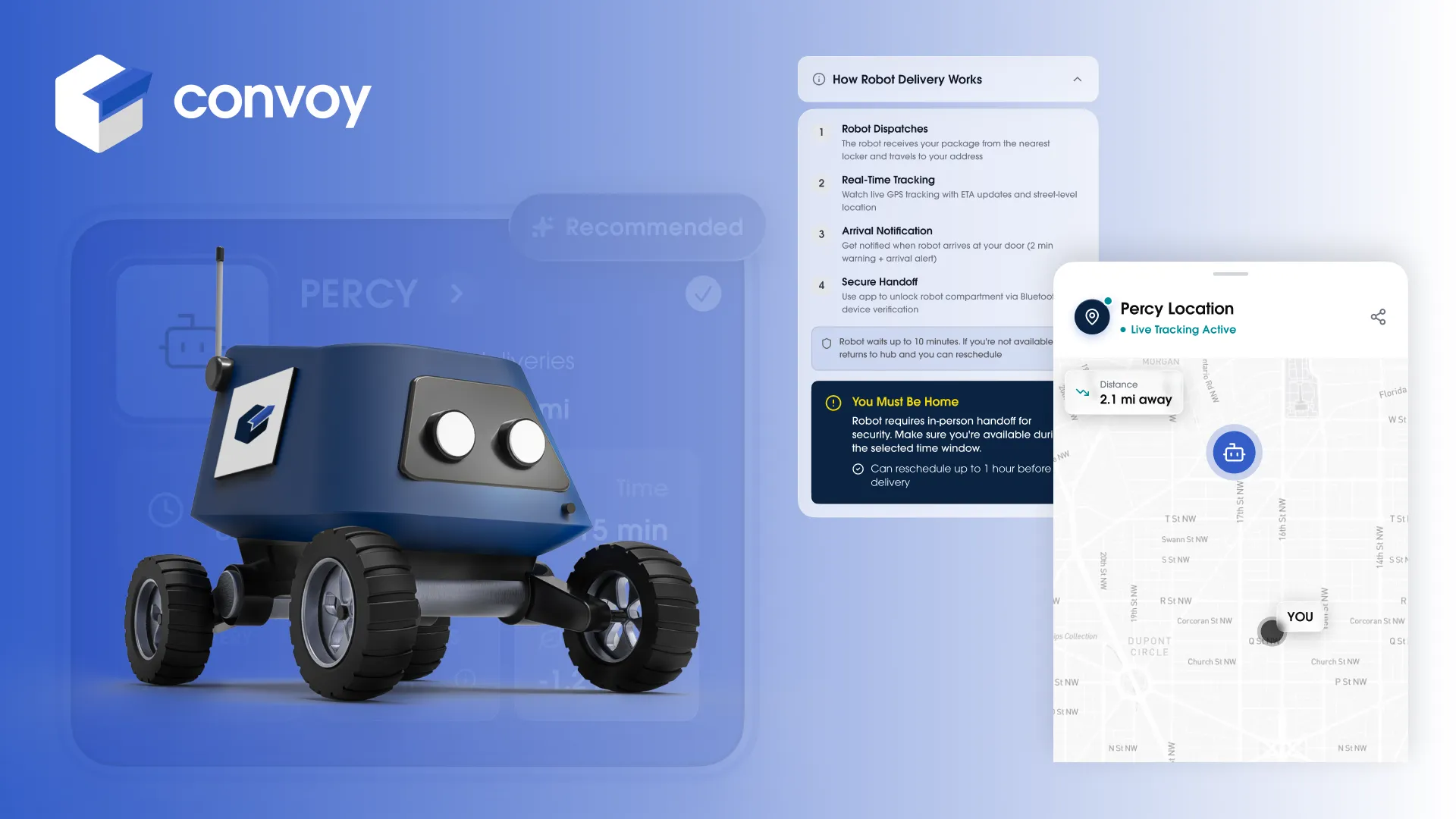
Problem Space
As package theft and loss become increasingly common, consumers are left without effective ways to protect their deliveries or prevent recurring losses. But our research — 109 survey respondents and 13 interview participants — revealed that people don't change their ordering behavior because of theft. The deeper friction was unreliable tracking, inconsistent notifications, and a delivery system that gives recipients no control over when or how packages arrive.
Research Framing
The team assumed we'd design a home security solution like a smart lockbox or porch safe to prevent package theft. We were initially trying to understand how package theft affects customers' experience ordering and receiving a product for delivery.
To understand package delivery processes from the perspective of customers and drivers, we needed to answer the following questions: "What is the current package delivery process for delivery drivers and customers?" and "How do consumers experience package delivery and theft?" These questions guided our generative mixed-methods approach to understand not just whether theft happened, but whether it actually changed how people ordered, tracked, and received packages.
My Role & Constraints
My Role
Research Lead — wrote all interview and survey questions, conducted 3 of 13 user interviews, built the qualitative coding sheet (432 coded entries), synthesized findings into the five research themes that redirected the project, and designed the comprehensive system flowchart mapping all delivery paths.
Team
Brynn Jaratsonkit (Visual Lead), Giuseppe Mollo (Interaction & Industrial Design Lead), Max Clardie-Hoo (Project Manager). Task flows were collaborative, and the UI screens and visual design were not mine.
Constraints
One-quarter timeline, with no incentive budget. The quarter ended before we could run usability tests on the final designs.
Research Methods
Mixed-Methods Approach
I designed the study to start with a survey to surface the current problems, then follow with interviews to uncover why those problems occur. The 17-question survey was designed to uncover customers' ordering frequency, theft experience, spending tolerance, and value-dependent behavior. The results surfaced patterns across 109 respondents and helped us understand that package theft is not the primary pain point when ordering items online.
The semi-structured interviews allowed participants to provide deeper context into the issues they actually faced. The interview guide moved from warm-up ordering behavior through theft experience and response, into delivery notifications and tracking, and closed on trust, trade-offs, and willingness to pay.
Participant Demographics
109 survey respondents across age groups, housing types, and ordering frequencies.
Age Distribution
Housing Type
Ordering Frequency
Willingness to Pay
Monthly Spending Tolerance
The survey asked respondents how much they'd spend per month to protect packages. The majority weren't willing to spend more than $10, and a significant group wouldn't spend anything at all. This data was central to redirecting the project away from a premium home-security product.
Delivery Priorities
Delivery Priority (Forced Choice)
When forced to choose between cheapest, fastest, or most secure delivery, respondents overwhelmingly chose cost over security — reinforcing that users wouldn't adopt a solution that added expense.
Interview Data Analysis
Across 432 coded entries, three thematic clusters emerged: 100-series (problems), 200-series (current experience), and 300-series (desired experience).
Problems (100-series)
176 entries
Current Experience (200-series)
135 entries
Desired Experience (300-series)
105 entries
Every top desired-experience code pointed toward system-level transparency — not toward any product placed at the door.
Key Insight & Pivot
The picture that emerged from synthesizing the survey data and interviews revealed that a home security product would fail to solve the actual pain points participants expressed. Package theft wasn't frequent, severe, or costly enough to justify added cost or complexity, and users simply didn't value their packages enough to pay more to protect them.
The real problem was a broken delivery system that's inconsistent, unaccountable, and indifferent to the recipient. The driver research added another dimension: because drivers prioritize efficiency over careful handling, we needed a solution that worked with driver incentives rather than against them.
That reframe suggested a different design space entirely: rather than securing the home, we turned our focus to the delivery ecosystem itself. The infrastructure already existed in adjacent industries — Uber Eats and DoorDash had proven that real-time tracking and delivery windows were solvable at scale, and autonomous sidewalk robots were already navigating last-mile routes in LA. We envisioned a solution that takes the real-time tracking, scheduled delivery windows, and autonomous last-mile infrastructure proven by food delivery and adapts them to package delivery.
Outcome
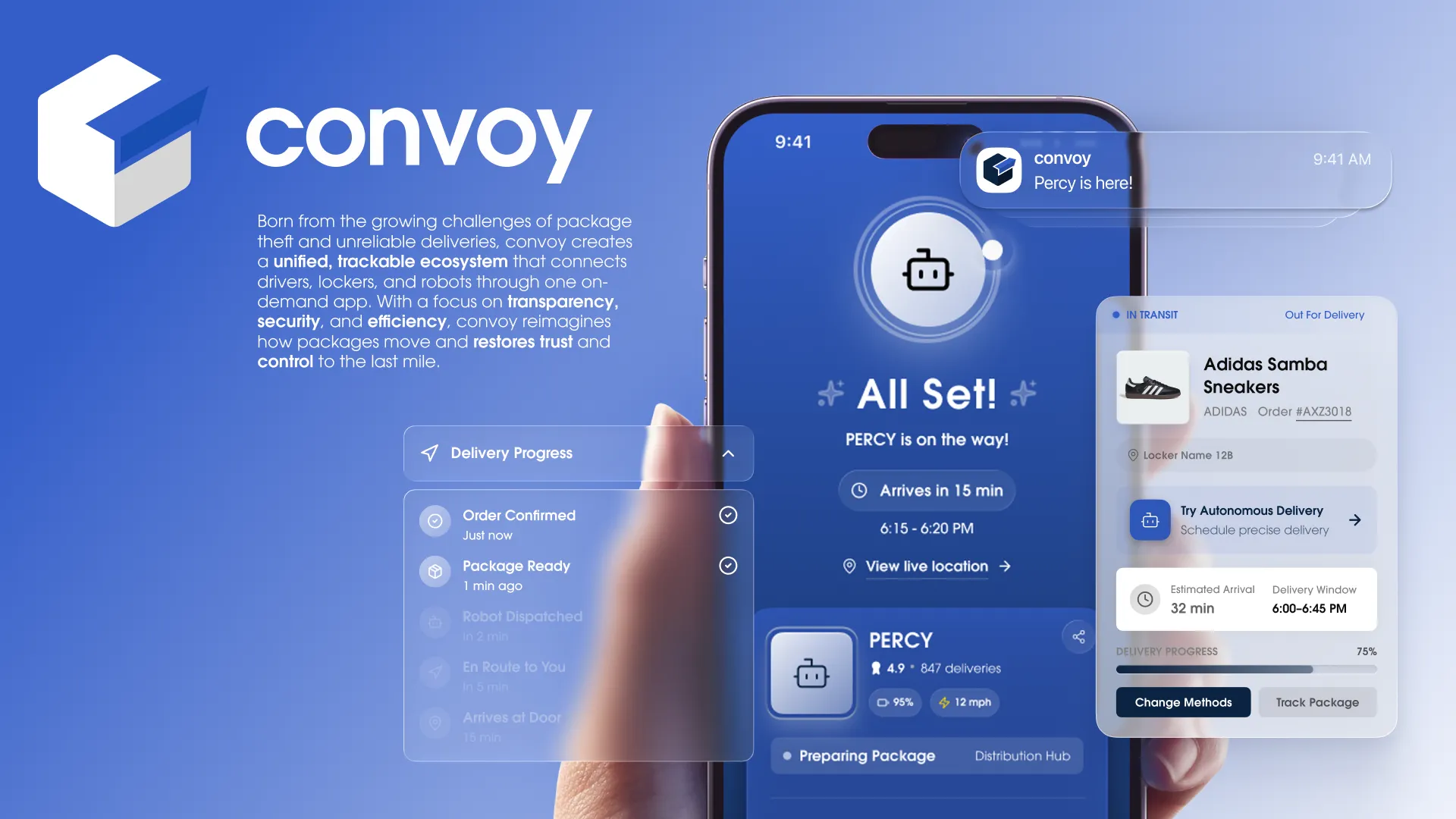
The research redirected the project entirely.
What started as a home security concept became a connected delivery ecosystem because the data proved users are more frustrated by the delivery system than by theft itself. The five findings I synthesized became the design brief: build around tracking transparency, secure-by-default delivery, customizable scheduling, and zero added cost to the user.
The final ecosystem — app-based delivery scheduling, neighborhood lockers, and 24-hour autonomous robot delivery — was presented at the end-of-quarter review, received well by both the class and professor, and nominated for submission to two design awards.
Delivery Ecosystem — System Flow
Full system flowchart mapping all delivery paths from hub to recipient.
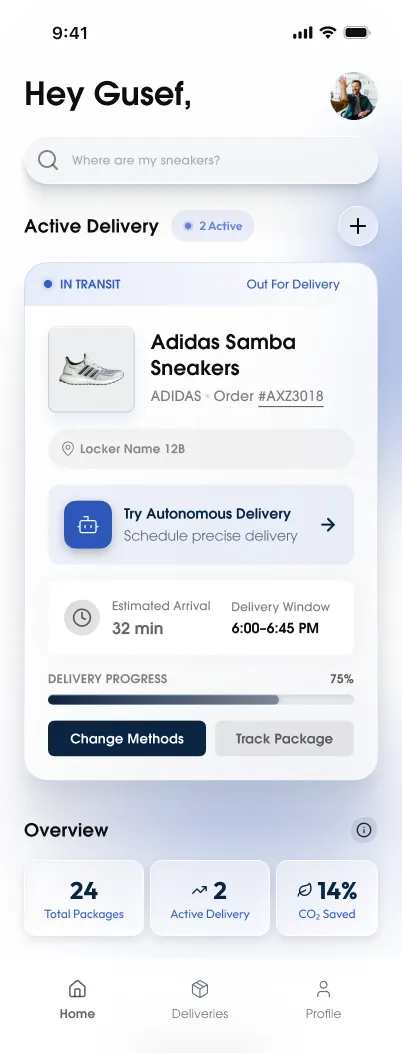
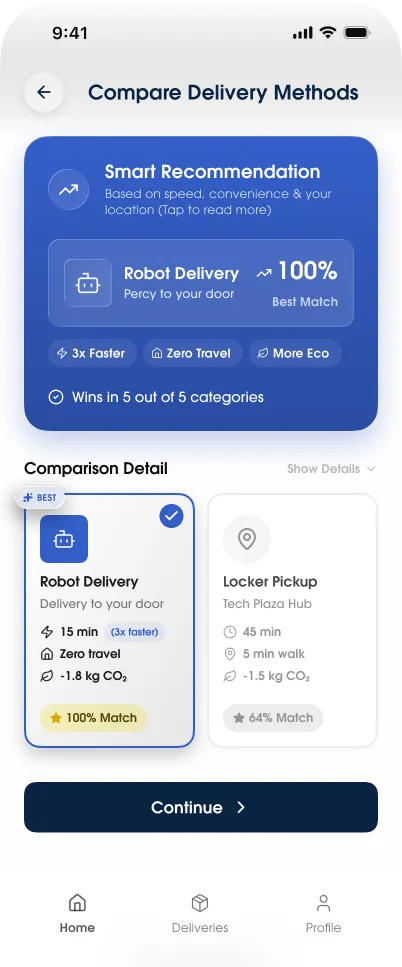
Final Design: The App
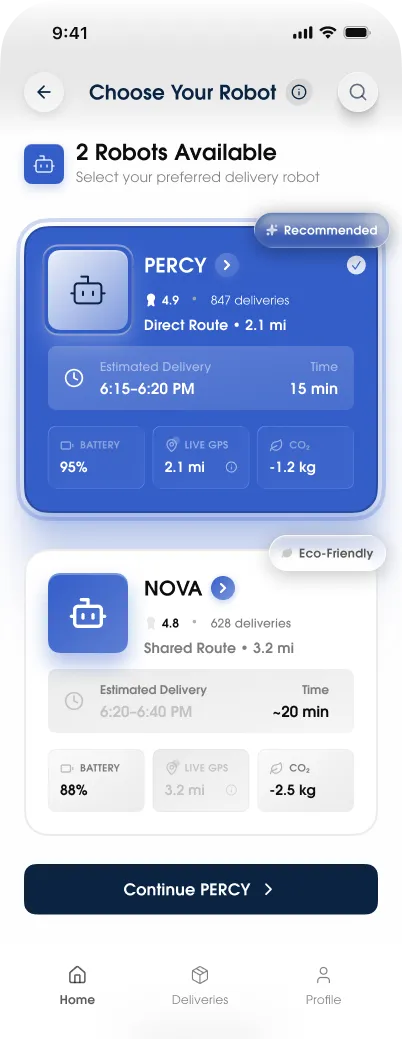
The Convoy app gives recipients control over their delivery experience — scheduling windows, choosing delivery methods, and real-time tracking across all carriers.
Final Design: The Locker
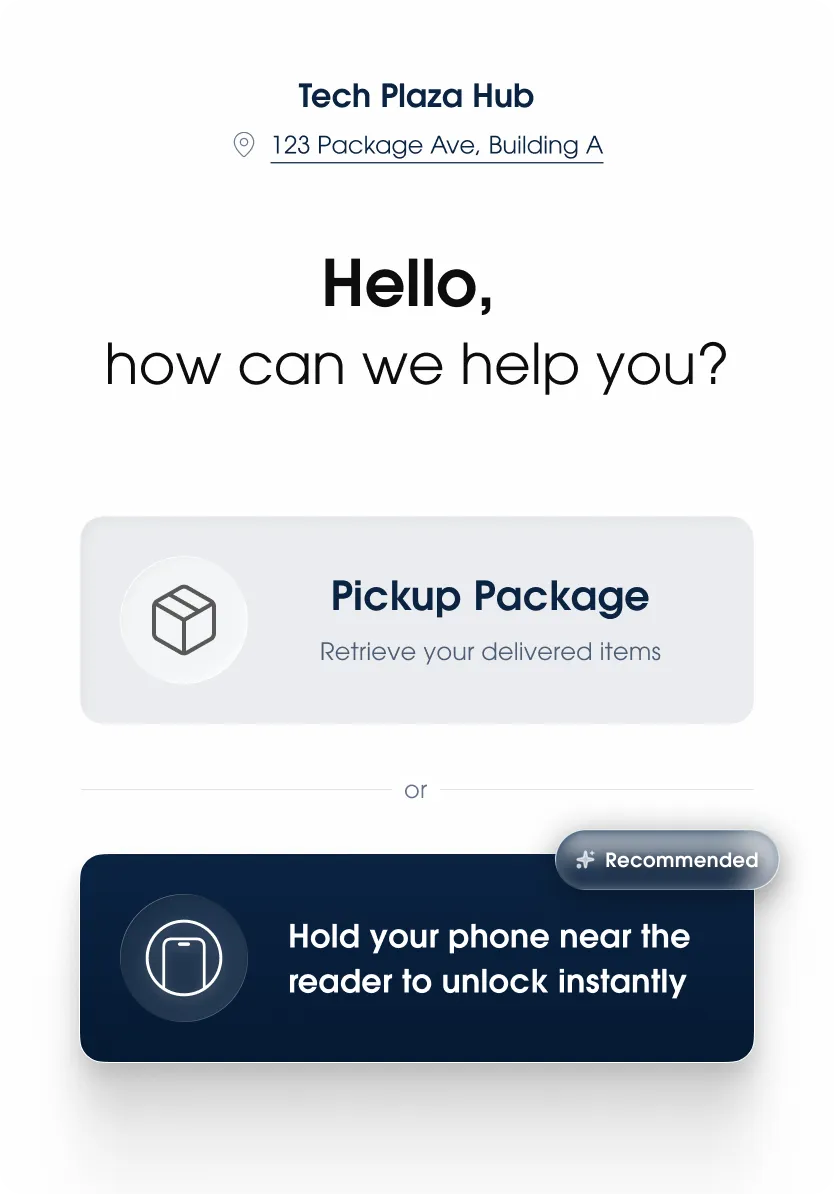
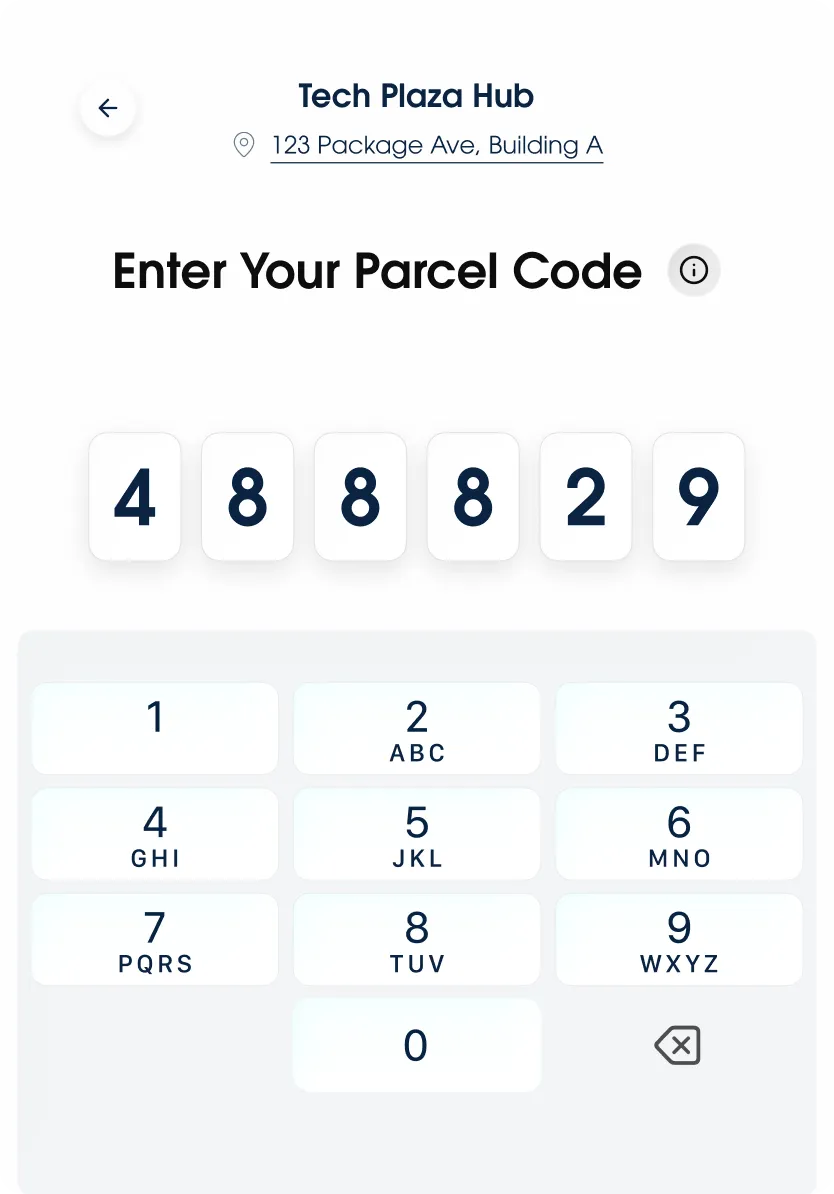
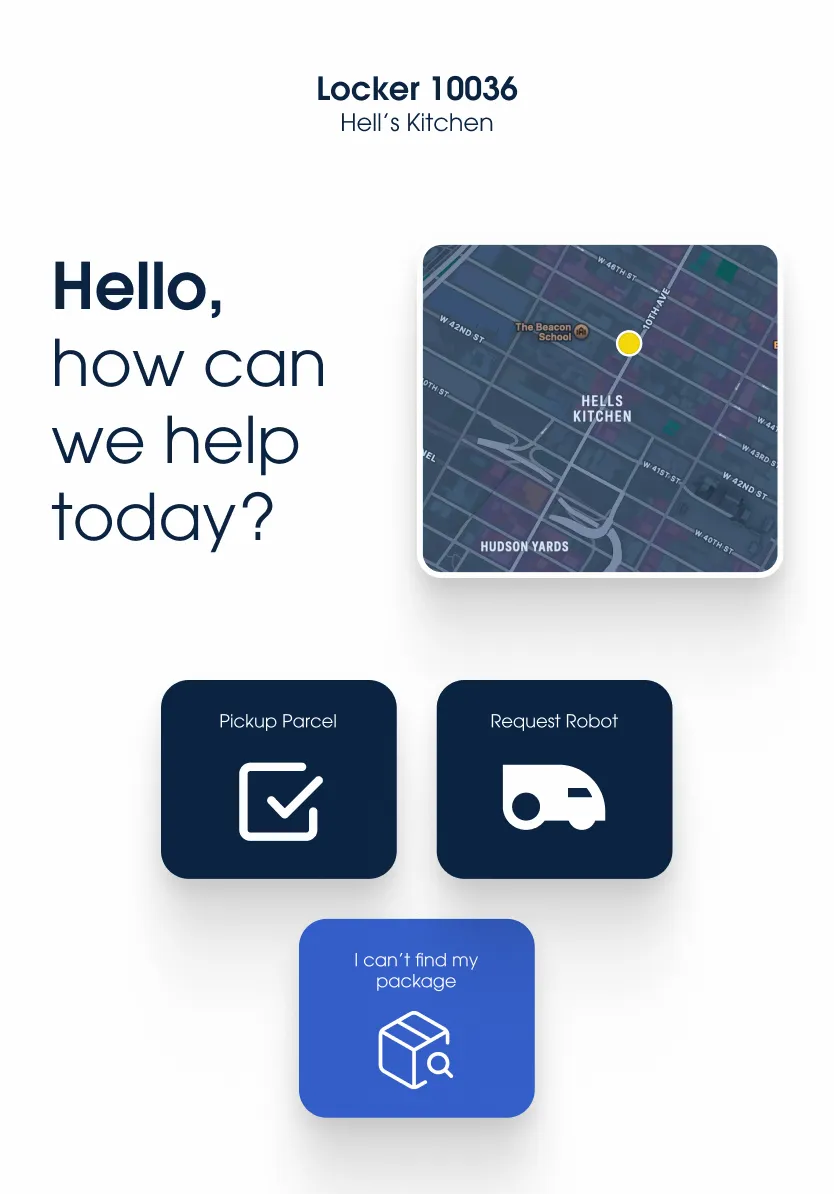
Neighborhood lockers provide secure-by-default delivery. The kiosk interface and NFC-enabled retrieval eliminate porch exposure entirely. Users can schedule precise robot delivery from the locker to their home.
Reflection
The final concept depends on user trust in autonomous delivery robots that we never validated. I'd research that perception early, before the solution took shape, since a concept that hinges on an unproven behavioral assumption is fragile regardless of how strong the surrounding research is.
I'd also stratify recruitment: 77% of survey respondents were 18–24, and the "theft doesn't equal behavior change" pattern may not hold for older demographics who carry different theft-risk profiles.
Finally, I'd protect time for at least one round of usability testing before the final presentation — the multi-path delivery model was never tested for actual comprehension.